
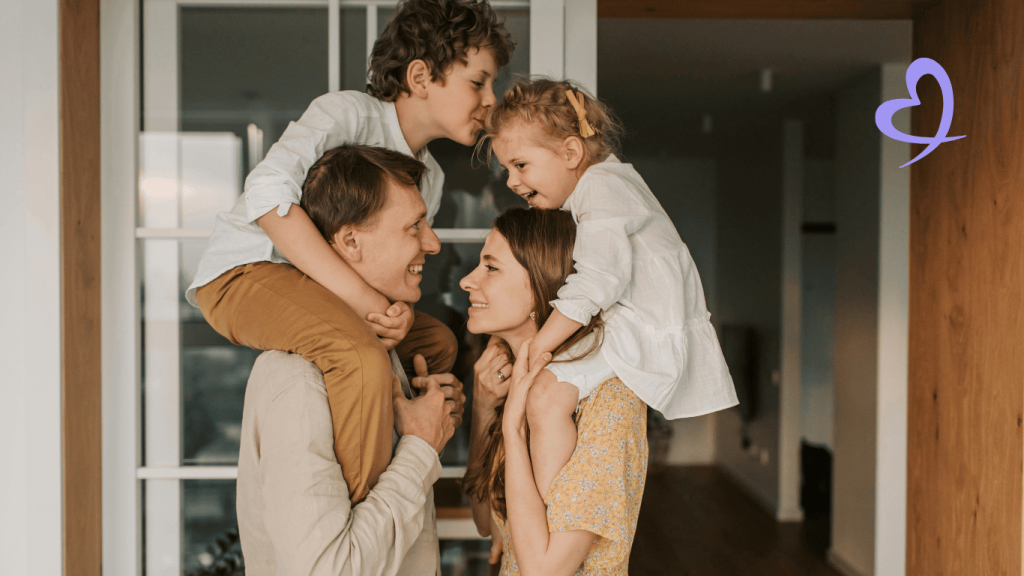
Tomorrow you’re introducing your new partner to your children, and you feel the pull of two things at once: excitement and concern. You want this to become something real, something that might grow into family, but underneath the anticipation are the questions keeping you up at night. Will they get along? Will this hold? How do you build something new without it costing your children what they already have? That worry is your first real insight into blended family life. You’re not merging two families into one. You’re asking two whole emotional systems, each with its own history, to coexist without either one having to disappear.
A blended family, sometimes called a stepfamily, is a household formed when one or both partners bring children from a previous relationship into a new one. It’s a more common family structure in Australia than most people realise. According to the Australian Institute of Family Studies, as of the 2021 Census, 12% of couple families with dependent children were step- or blended families, representing over 280,000 households nationally. It’s common enough to warrant its own body of research, not just borrowed advice built for nuclear families.
Why “Instant Family” Was Never Going to Work
Think about a soccer club that merges with another club after years of separate seasons and separate ways of doing things. You don’t get one team by putting both squads on the same pitch and hoping. The players who’ve trained together for years already know each other’s runs and shorthand. The new additions might be excellent players, but they don’t know the patterns yet, and the existing squad doesn’t automatically make room for them. A good coach doesn’t force the two groups to merge overnight, instead, they build new plays slowly and accept some old partnerships on the pitch will always run more smoothly than the new ones. That’s not failure. It’s what happens when two systems with history try to become one. Blended families work in a similar way. The bond between a parent and child was built over years before a new partner ever walked in. A stepparent isn’t the wrong signing, they’re new to a team that already knows how to move together, and it takes real time before the new patterns feel as natural as the old ones.
The Insider and the Outsider
This is worth naming plainly, because this dynamic creates a lot of quiet suffering, and it’s no one’s fault. It’s how human systems work.
Biological parents occupy what family therapist Dr Patricia Papernow calls the “insider” position. They’ve seen their children through infancy, illness, and everyday life, which means they have automatic emotional access that was never earned because it built up naturally over years. A biological parent can read a child’s mood from across a room.
Stepparents enter as outsiders. They walk into a family with its own coalitions and unspoken rules about who does what. They arrive with goodwill and often real skill, but they are, structurally, new, and that doesn’t change just because they’re a wonderful person. Some of the most patient, committed stepparents I’ve worked with still feel painfully invisible for years, simply because that’s what this structure produces.
What tends to happen next: the biological parent, sensing their child’s hesitation, unconsciously protects that closeness by holding onto primary decision-making and emotional access. The stepparent, meeting consistent distance, starts to withdraw and reach less often. They can look uninterested, when really they’re protecting themselves from reaching and not being met. None of this is about anyone’s character. It’s what happens when something new meets something already established.
The Binuclear Family
Divorce does not necessarily mean the end of a family. It can mean the reorganisation of the family into what Constance Ahrons describes as a “binuclear family”, with one family system continuing across two households. In her long-term study, Ahrons found that the way parents continued to relate to each other after divorce was closely connected to the quality of children’s relationships within the wider family. Children who experienced their parents as cooperative reported better relationships not only with their parents, but also with grandparents, stepparents and siblings. It’s one of the clearest arguments for ending a relationship with respect, even when the marriage itself is over. The concept of the binuclear family reminds us that although the marriage may end, the family does not simply disappear. The relationships continue, but they need to be reorganised and renegotiated so that children can maintain meaningful connections with both sides of their family, which is much of what goes into helping kids adjust after divorce well.
Rituals Build What Time Alone Can’t
Presence is what makes a family, the ordinary stuff repeated until it becomes sacred. The blended families that work don’t force unity. They assemble it, piece by piece, the way a mosaic gets its beauty from the differences between the pieces. Biological parents keep the old threads alive, Sunday pancakes, a standing call to grandparents, so the child still recognises who they’ve always been. Those are roots.
Stepparents need something of their own, not a performance of instant closeness but a small, steady ritual that belongs only to the two of them. I once worked with a stepfather who knew he’d never be the one his stepdaughter turned to for homework help. But he could be the one who took her rock climbing every Saturday. That narrow, unwavering ritual became solid ground, deep enough to hold real trust even though it never tried to cover everything.
Realistic Timelines Change Everything
One of the more damaging myths in blended family culture is that love can compress a timeline, that with the right effort you can feel like “one family” within a year or two. In Dr Papernow’s book she estimates that full integration can take around four to seven years, and the first two years are usually the most conflict-heavy of all.
That’s not because anyone is doing it wrong. Every person in the household is learning to be a different version of themselves in a new structure, and that takes renegotiating basics: how much affection is normal, what privacy means, who disciplines and when. Couples who expect to feel “normal” by year two often panic when it hasn’t happened. It hasn’t failed. It’s on schedule. The couples who make it aren’t the fastest to integrate – they’re the ones who stop treating the struggle as proof something’s wrong and start treating it as part of the process.
What Actually Helps While You Wait It Out
A few things make the waiting survivable. Name the specific losses honestly, not as complaint, “we lost our Friday nights,” “we lost the simplicity of being just us“, and let grief have its own space before you try to fix anything. Protect a couple ritual that’s genuinely non-negotiable, a Thursday night or a Sunday coffee before anyone else is awake, and tell the children plainly why: “you need parents who love each other, and this is what makes that possible.” Let the stepparent find their own lane rather than mirroring the biological parent’s role, a shared activity often becomes the real bridge, more sustainable than forced bonding. And treat the developmental stage you’re in as information, not a verdict. Knowing “we’re in year two, and year two is hard” stops a normal struggle from being read as failure.
Daniel and Sofia
Daniel, an involved father of two teenagers, had been divorced six years and knew co-parenting well. Sofia, raising her eight-year-old alone, valued structure and calm. The first six months felt easy, and both assumed this was simply what blended family would feel like.
By month eight, cracks appeared that neither read as structural. Sofia set clearer phone rules; Daniel thought them rigid; his children complained to him, and he didn’t back her up. Sofia dug in further. It was a classic pursue-withdraw cycle, but they had no language for it, just hurt and growing distance. By year two, intimacy had dropped away and they were competently co-managing children while quietly ceasing to partner each other.
In year three, Sofia, lonely inside a full house, started individual therapy, then reluctantly agreed to bring Daniel in. The therapist didn’t touch the phone rules. She asked Daniel what it was like to fade into the background when Sofia and the kids came home. His eyes filled. “I feel like I don’t belong.” Asked what happens when Daniel withdraws, Sofia said, quietly, “I think I’m not enough.”
Over the following months they worked on noticing the pursue-withdraw pattern as it happened and turning back toward each other instead of away. By year four they’d claimed Thursday nights, non-negotiable. By year five they weren’t perfect, but they were solid enough to disagree without it threatening them. “I know Sofia has my back,” Daniel says now. “And she knows I have hers.”
(Daniel and Sofia are a composite, drawn from common patterns across many couples, with all identifying details changed.)
Stability in blended families doesn’t come from perfect blending. It comes from a couple that can say: ‘We know this is hard. We know it will take years. We know we won’t ever feel like the nuclear family we imagined. But we’re choosing each other anyway. We’re building something real, even if it’s different from what we expected.

How Therapy Can Help
Couples usually arrive believing the problem is the kids not adjusting, an ex-partner interfering, or a new partner not trying hard enough. Rarely do they name the actual pattern: the couple’s relationship has quietly been deprioritised in service of building “family.”
Family counselling doesn’t always start with co-parenting techniques. A therapist may first help restore the couple’s relationship, recognise how withdrawal traps a relationship before it hardens into distance, and help them turn back towards each other. For stepparents feeling invisible, even a handful of individual sessions can matter. Finding the right kind of support for what you’re actually going through makes a real difference, hearing plainly that this was always going to be hard, and that what they’re building will be real, just slower than imagined.
Seek support early if you haven’t had a meaningful conversation in months, if one partner keeps reaching while the other keeps retreating, or if a stepparent has quietly stopped trying. Year one is preventive. Year four, with patterns entrenched, takes more work, but it’s still workable.
Frequently Asked Questions
How do I know if my stepparent/partner is genuinely committed, or just waiting for me to give up?
Real commitment shows up as consistency over time, even when a child is distant. A committed stepparent creates small moments of connection without demanding anything back. Someone who isn’t, will keep score, “after everything I’ve done.” Years in, the difference is obvious.
Is it normal for a stepparent to feel invisible when the kids arrive?
Yes, it’s one of the most consistent experiences stepparents report early on. The biological parent has automatic access and authority; the stepparent doesn’t. It isn’t failure, it’s structural, and naming it openly is what helps a couple get through it together.
My children will never accept my new partner. What do I do?
“Acceptance” is too high a bar early on. What children need is safety, consistency, clear boundaries, respect for their other parent. Many stepparent-stepchild relationships that thrive are built on cordial respect rather than closeness. That’s genuinely enough.
How long until a blended family feels normal?
Research points to four to seven years for real integration, with the first two years typically the hardest. Don’t panic in year two, you’re on schedule, not failing. Most couples report feeling solid around year four or five.
Should I prioritise my partner or my children?
This isn’t really a choice. A couple that protects their own connection, including intimacy and support through conflict, offers children more security than a couple that’s entirely child focused. Kids notice whether the adults around them are actually in a relationship.
What if the stepparent wants more discipline authority than I’m comfortable with?
Align privately before responding to the child. A stepparent can enforce household rules, while bigger decisions can be worked out between the adults based on the roles and structure of your family. Disagree in private, a unified front doesn’t mean identical parenting, it means the child never sees daylight between you.
How do we recover intimacy after co-parenting conflict has worn us down?
Not by fixing the conflict first. Intimacy returns through small reconnections, eye contact, touch, shared laughter and an EFT-trained therapist can help couples find these moments even inside conflict. Physical closeness tends to follow emotional reconnection, not the other way round.
My ex keeps interfering. Can we still build stability?
Yes, if you and your partner present a genuinely united front on your own relationship, even while staying flexible on parenting logistics. When the ex creates drama, a consistent couple response, “we’re handling this together,” is one of the strongest protective factors a new blended family has, and it’s part of what couples counselling can actually help build: a genuinely united front, not just a truce.
Sources
Papernow, P. L. (2013). Surviving and Thriving in Stepfamily Relationships: What Works and What Doesn’t. Routledge.
Papernow, P. L. (2018). Systemic supervision of stepfamily therapists: Knowing more, doing better. Journal of Family Psychotherapy, 29(2), 103-119.
Ahrons, C. R. (2007). Family ties after divorce: Long-term implications for children. Journal of Family Psychology, 20(1), 147-155.
Johnson, S. M. (2019). Attachment Theory in Practice: Emotionally Focused Therapy (EFT) with Individuals, Couples, and Families. Guilford Press.
Ganong, L. H., Coleman, M., and Jamison, T. (2011). Patterns of stepchild-stepparent relationship development. Journal of Marriage and Family, 73(2), 396-413.
Australian Institute of Family Studies. (2021). Families and family composition. Australian Government.

 Melinda Hart Penten

 Christine McKee
 Cristina Wildt


